
Steam Boilers
High-efficiency, fully cylindrical 3-pass Scotch-type steam boilers have a large water capacity to meet sudden steam pressure demands. Vertisa’s steam boilers are widely preferred in the steam production industry due to their superior efficiency and excellent compatibility.
All our design and manufacturing processes are carried out in compliance with CE and DIN EN standards.
Production Features
- Liquid and Gas-Powered Steam Boilers
- Solid Fuel Boilers (Coal and Wood Pellets)
- Electric-Powered Steam Generators
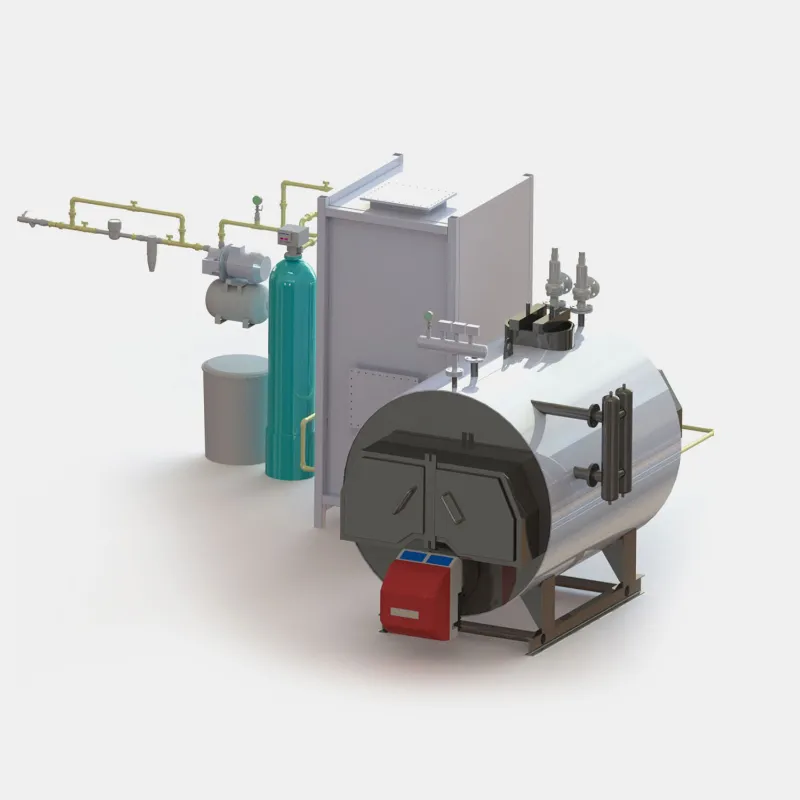
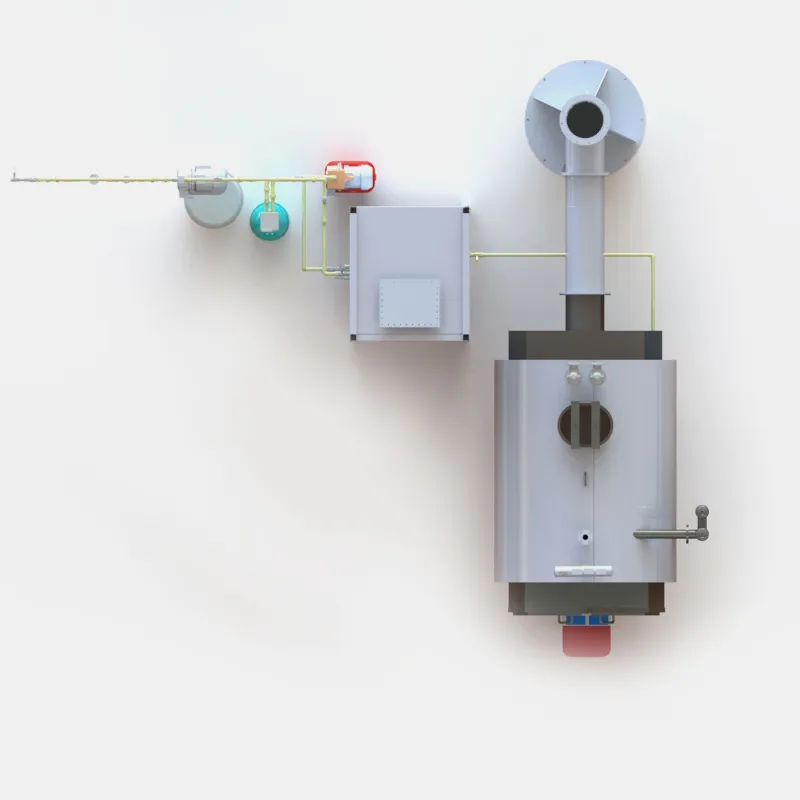
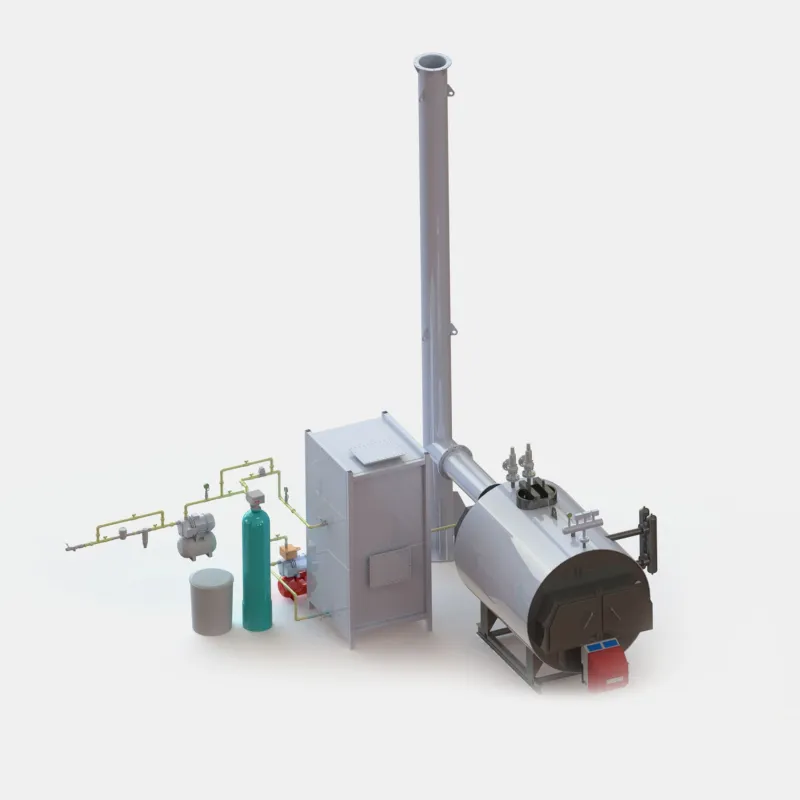
Technical Specifications and Boiler Capacity
- Insulation: Coated with galvanized and stainless steel, 80 kg/m³ density – 10 cm glass wool
- Steam Capacity: 100 kg/hour – 7,000 kg/hour
- Three-Pass Steam Boiler: Cylindrical and Semi-Cylindrical Design
- Capacity Range: 100 kg/hour – 7,000 kg/hour
- Control System: 7-inch touchscreen with Vertisa TeknoSec 3.1 software
- Operating Pressure: 4.0 – 6.0 bar
- Test Pressure: 6 – 10 bar
- Construction Material: P235GH. 6337 - 6341
- Fuel Options: Diesel, Natural Gas, LPG, LNG, CNG, Coal
- Smoke Tubes: St 35.8, compliant with DIN 2448 standard
Structural Features
- Morrison-Type Full-Size Corrugated Combustion Chamber
- Reinforced Pressure-Resistant Body
- Optimally Sized Gas Flow Passages
- High-Capacity and Quality Steam Production
- Water-Cooled Combustion Chamber
Material Features
- Weldless steel tubes are manufactured in compliance with DIN 17175 standards.
- Boiler shells, end plates, combustion chamber, and fire plates are produced in accordance with DIN EN 10028 standards.
Vertisa VSB Series Steam Boilers
| No | MODEL | KG | WATER (LT) | STEAM (KG/H) | KW | SOLID FUEL (KG/H) | LIQUID FUEL (KG/H) | KW | kCaL/H |
|---|---|---|---|---|---|---|---|---|---|
| 1 | VSB 5 | 900 | 460 | 130 | 3.2 | 130 | 170 | 85 | 74,000 |
| 2 | VSB 10 | 1300 | 720 | 195 | 5.0 | 260 | 340 | 171 | 146,000 |
| 3 | VSB 15 | 2000 | 1150 | 295 | 8.0 | 390 | 510 | 256 | 220,000 |
| 4 | VSB 20 | 2500 | 1421 | 420 | 9.9 | 520 | 680 | 341 | 294,000 |
| 5 | VSB 25 | 2800 | 1650 | 660 | 11.5 | 650 | 850 | 426 | 366,000 |
| 6 | VSB 30 | 3200 | 1985 | 680 | 13.9 | 780 | 1020 | 512 | 440,000 |
| 7 | VSB 35 | 3600 | 2443 | 700 | 17.1 | 910 | 1190 | 597 | 514,000 |
| 8 | VSB 40 | 3900 | 2630 | 740 | 18.4 | 1040 | 1360 | 682 | 587,000 |
| 9 | VSB 45 | 4200 | 2697 | 1100 | 18.9 | 1170 | 1530 | 768 | 660,000 |
| 10 | VSB 50 | 4550 | 3250 | 1150 | 22.7 | 1300 | 1700 | 853 | 740,000 |
| 11 | VSB 55 | 4950 | 3800 | 1220 | 26.6 | 1430 | 1870 | 938 | 806,000 |
| 12 | VSB 60 | 5400 | 3850 | 1250 | 26.9 | 1560 | 2040 | 1023 | 880,000 |
| 13 | VSB 65 | 5700 | 3940 | 1300 | 27.6 | 1690 | 2210 | 1109 | 953,000 |
| 14 | VSB 70 | 6200 | 4040 | 1350 | 28.3 | 1820 | 2380 | 1194 | 1,030,000 |
| 15 | VSB 75 | 6600 | 4210 | 1410 | 29.4 | 1950 | 2550 | 1279 | 1,100,000 |
| 16 | VSB 80 | 6900 | 4480 | 1470 | 31.3 | 2080 | 2720 | 1365 | 1,173,334 |
| 17 | VSB 90 | 7400 | 4700 | 1530 | 32.9 | 2340 | 3060 | 1535 | 1,320,000 |
| 18 | VSB 100 | 7600 | 4950 | 1550 | 34.6 | 2600 | 3400 | 1706 | 1,466,667 |
| 19 | VSB 110 | 7900 | 5120 | 1590 | 35.8 | 2860 | 3740 | 1876 | 1,613,334 |
| 20 | VSB 120 | 8000 | 5400 | 1620 | 37.8 | 3120 | 4080 | 2047 | 1,760,000 |
| 21 | VSB 125 | 9000 | 5830 | 1660 | 40.8 | 3250 | 4250 | 2132 | 1,833,334 |
| 22 | VSB 130 | 9300 | 6000 | 1720 | 42.0 | 3380 | 4420 | 2217 | 1,906,667 |
| 23 | VSB 140 | 9700 | 6075 | 1760 | 42.5 | 3640 | 4760 | 2388 | 2,053,334 |
| 24 | VSB 150 | 10150 | 6150 | 1950 | 43.0 | 3900 | 5100 | 2559 | 2,200,001 |
| 25 | VSB 175 | 11000 | 6280 | 2100 | 43.9 | 4550 | 5950 | 2985 | 2,566,667 |
| 26 | VSB 200 | 12100 | 6400 | 2250 | 44.8 | 5200 | 6800 | 3411 | 2,933,334 |
| 27 | VSB 225 | 12900 | 7000 | 2320 | 49.0 | 5850 | 7650 | 3838 | 3,300,001 |
| 28 | VSB 250 | 13700 | 7750 | 2400 | 54.2 | 6500 | 8500 | 4264 | 3,666,668 |
| 29 | VSB 275 | 14600 | 9000 | 2560 | 62.9 | 7150 | 9350 | 4691 | 4,033,334 |
Steam boiler systems are designed to convert water into steam by heating it. These pressure vessels facilitate the transformation of water into steam using energy derived from burning solid fuels (such as coal and wood), liquid fuels (such as fuel oil and diesel), or gas fuels (such as LPG and natural gas). Essentially, a steam boiler converts the chemical energy of fuel into heat energy through combustion, then transfers this heat to the working fluid, enabling the production of steam.
Advantages of a Steam Boiler
Classification of Steam Boilers
Buhar Kazanı Türleri Aşağıdaki Kriterlere Göre Sınıflandırılır:
Kullanım alanına göre:
- Sabit buhar kazanları
- Hareketli buhar kazanları
Yakıt türüne göre:
- Katı yakıtlı buhar kazanları (Kömürlü Buhar Kazanı)
- Sıvı yakıtlı buhar kazanları (LPG Buhar Kazanı)
- Gaz yakıtlı buhar kazanları (Doğal Gaz Buhar Kazanı)
- Elektrikli buhar kazanları
Yanma işleminin gerçekleştiği yere göre:
- Dıştan yanmalı buhar kazanları
- İçten yanmalı buhar kazanları
Buhar basınç seviyesine göre:
- Düşük basınçlı buhar kazanları (0.5 bar)
- Yüksek basınçlı buhar kazanları (0.5 bar ve üzeri)
Üretim malzemesine göre:
- Dökme demir buhar kazanları
- Çelik buhar kazanları
How Is Energy Efficiency Achieved in Steam Boilers?
1. To Increase the Efficiency of Steam Boilers
- Adjusting the excess air quantity during combustion
- Flue gas exit temperature (varies depending on the boiler’s design and operating principle)
- Proper adjustment of the air-fuel ratio and selection of an appropriate fuel type
- Moisture content in the fuel
- Enhancing fuel consumption efficiency
- Reducing heat losses from the boiler body to the surrounding environment
- Controlling critical factors such as feedwater
2. Regular Maintenance of the Boiler is Essential.
- Steam leaks must be prevented.
- Insulation should be applied correctly and completely.
- Combustion air must be continuously monitored.
- The combustion chamber in the steam boiler should be cleaned regularly.
- Scale and residue buildup in the boiler must be removed.
- The fluidity of the fuel should be checked periodically.
3. Heat Recovery Should Be Implemented in Boilers.
- Heat from flue gases can be used to heat feedwater, utilizing the thermal energy contained in the flue gases.
- Preheating combustion air can increase boiler efficiency.
- The system used to discharge foreign substances carried into the boiler with feedwater and accumulated inside is called the “blow-off” system.
- During the blow-off process, some energy is released. A portion of this energy can be recovered by passing the discharged hot water through a flanged tank to reheat it.
- The system pressure should be reduced. As a result, the flue gas temperature will decrease due to increased cooling of the smoke within the boiler, improving efficiency. However, the amount of flash steam will decrease due to lower pressure.
- Energy from the steam collected in condensate traps can be utilized for heat recovery.
What Should Be Considered When Choosing an Ideal Steam Boiler?
- The efficiency of the steam boiler should be considered.
- The required steam boiler capacity should be accurately determined, and a boiler with a capacity 20% above the calculated need should be preferred. This is because the steam boiler operates most efficiently at 80% load.
- The steam boiler capacity should not exceed 20% more than required, as this can reduce the steam flow and cause the boiler to operate at lower efficiency.
As Vertisa Environmental Technologies, our company has been among the leading manufacturers of steam boilers for years.
To learn about Vertisa Environmental Technologies steam boiler prices, you can contact us.